Protected
Selected work
This portfolio contains client work. Enter the password to continue.
Predictive worksite safety
- Strategy
- Research
- Machine learning
- Safety
Leading the R&D programme at FYLD to test whether machine learning could predict utility safety incidents — securing an additional £400k in OFGEM Strategic Innovation Fund grants and developing a patent-pending safety reporting system.
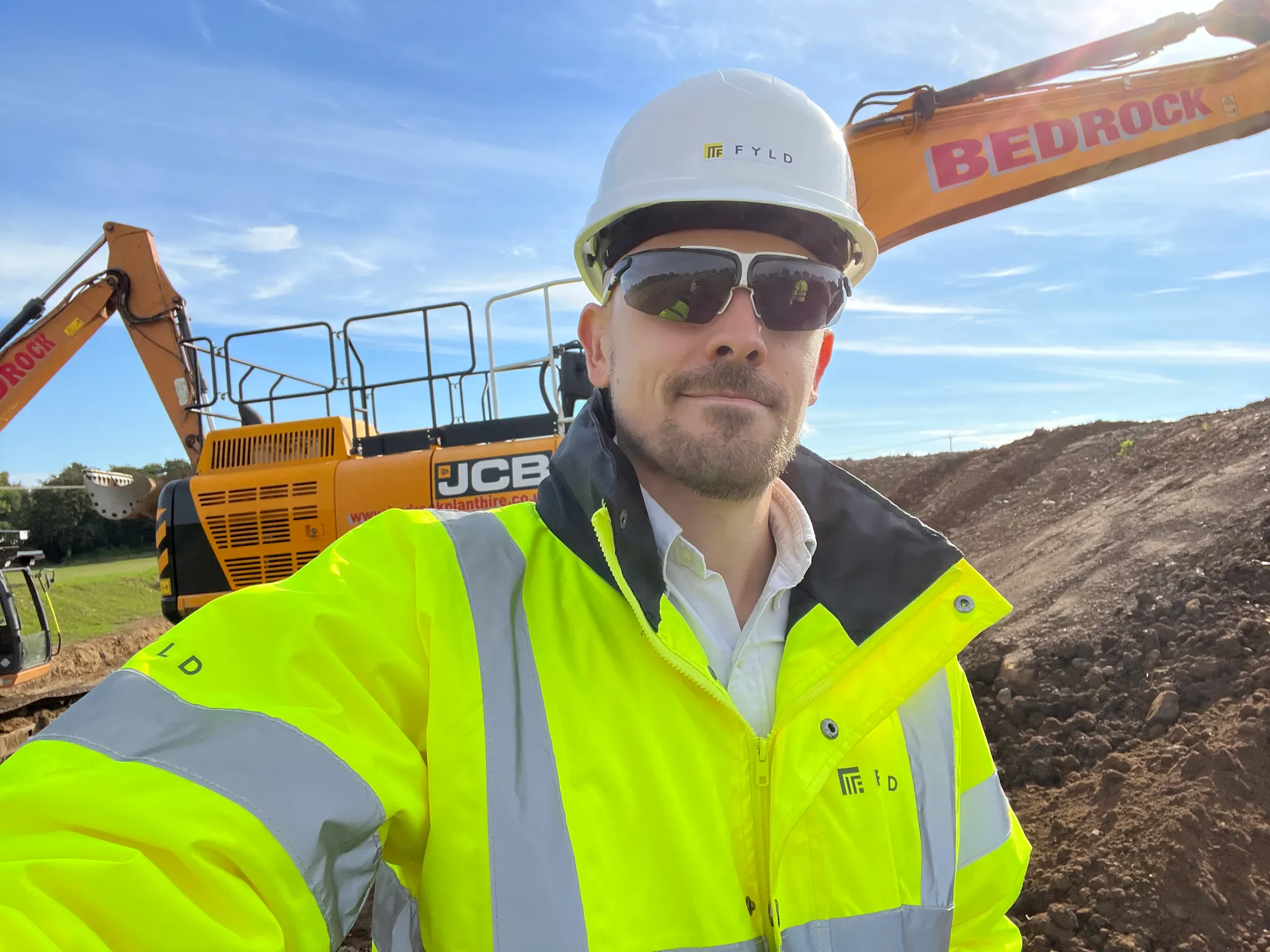
Injuries and fatalities in UK construction and utilities have plateaued for eight years. In 2021 alone, 15 fieldworkers died and more than 2,000 were injured so badly that they couldn’t return to work. The strategies in use aren’t working.
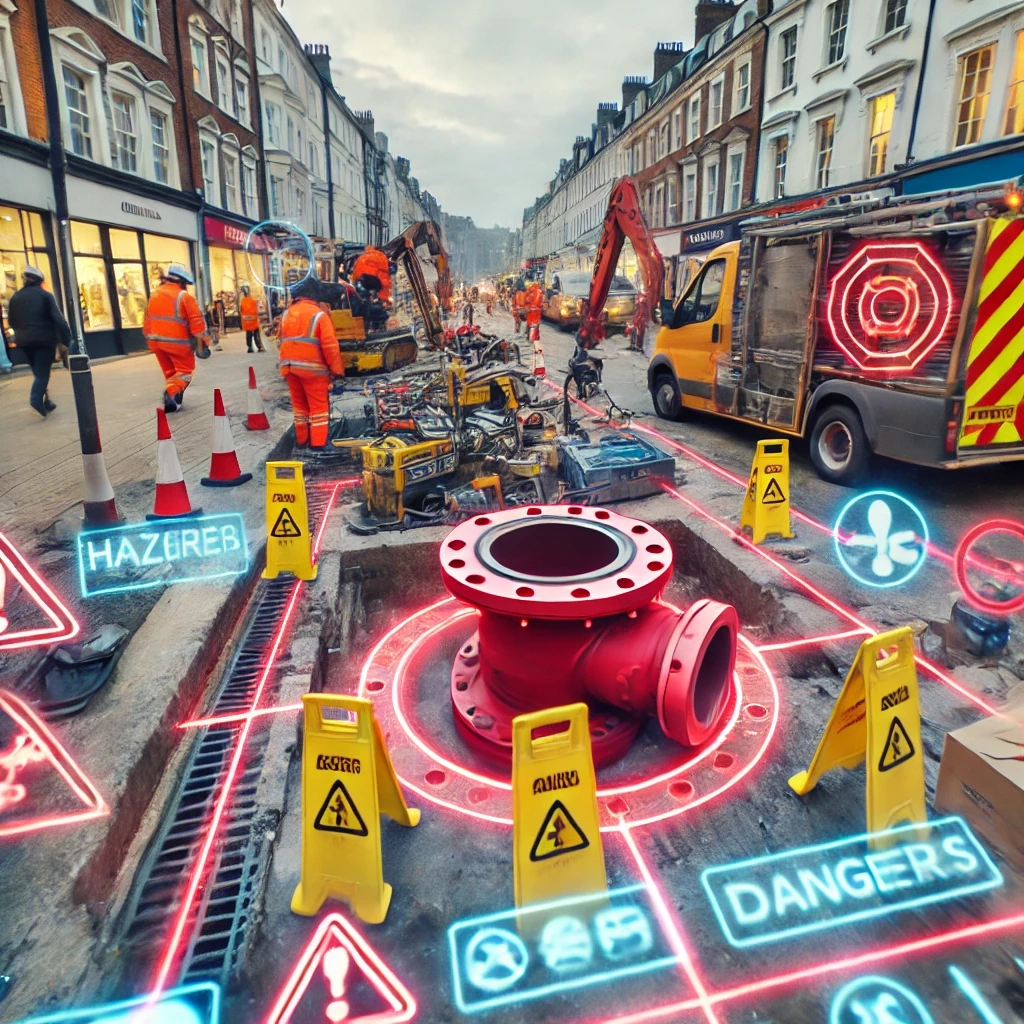
At FYLD I led a cross-discipline team - alongside 7 industry partners - to test whether a machine learning model could accurately predict and amplify worksite safety. The plan: combine ML and augmented reality so every fieldworker makes the safest choice, every day.

Partners: Scotia Gas Networks (SGN), National Grid, Thames Water, Kier, Morrison Water Services, Morrison Energy Services, Yorkshire Water, Cadent
The problem
The Accident Triangle — sometimes drawn as an iceberg — says that for every visible injury or fatality there are many more unreported incidents and near misses underneath. Capture the indicators and you can run experiments to reduce the events that lead to harm.
The trouble is, those indicators are massively under-reported. In 2021:
- SGN captured an estimated 2% of the indicator events they should have seen — a shortfall of around 85,000 reports
- Thames Water — five years further along on the safety journey — captured ~60%, still short by ~80,000
- Across the utilities industry, the estimated shortfall ran to 33.6 million indicator events
Without that data, no model — statistical or otherwise — has anything reliable to learn from.
What each role needed
- Reporting to feel useful, not like overhead
- A faster, simpler way to capture what actually happened
- Confidence that effort spent reporting led to safer worksites
- Higher-quality, more complete safety data
- Consistent definitions across teams and companies
- A standardised way to assess and compare incidents
- Real-time visibility into worksite risk
- Ability to act on patterns before incidents happen
- Shared standards that let them learn from each other's data
- A way out of an 8-year plateau in injuries and fatalities
- Lower cost, less delay, and safer access to street works for the public
Approach
FYLD was awarded £60k and twelve weeks to assess feasibility. I ran discovery end-to-end and partnered with a senior ML engineer on a proof-of-concept model.
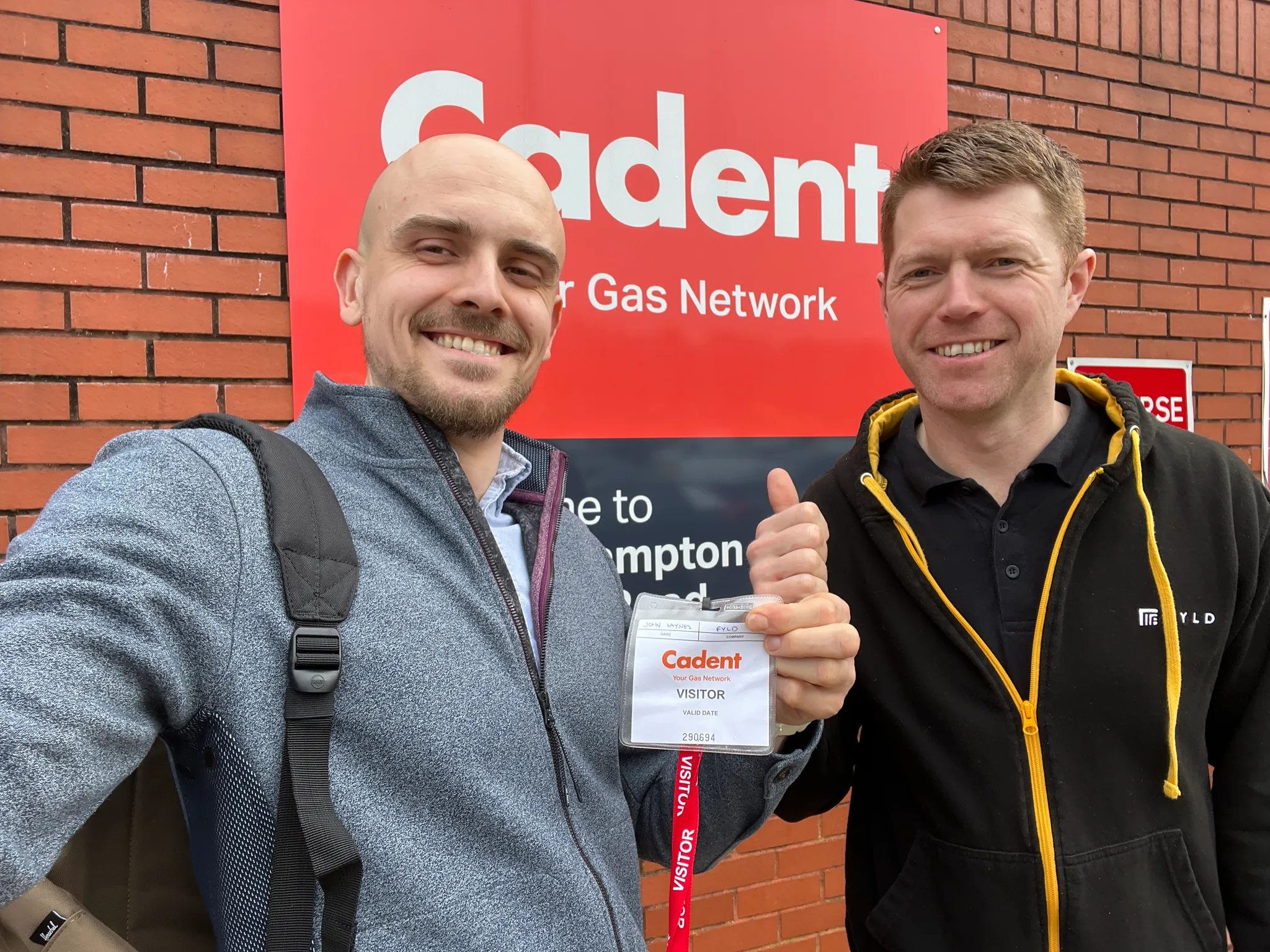
I interviewed HSE leaders, operational directors and fieldworkers across Kier, Thames Water, Yorkshire Water, National Grid, Morrison Group, SGN, Cadent and several utility subcontractors. Every company followed broadly similar safety procedures — toolbox talks, the authority to shut down operations, safety reporting baked into operational KPIs — but the data each company produced was patchy, single-perspective, and impossible to compare.
What I designed
Outcomes
What changed for each role
- Patent-pending reporting form designed to lower the cost of capturing what happened
- Standardised safety matrix across operators — co-designed and signed off in feasibility
- £460k non-dilutive R&D funding secured across two OFGEM SIF stages
- Patent application filed (me as named inventor)
- Validated foundation to take real-time prediction and AR intervention into Alpha